

关于双上联去堆叠网络架构的一点总结
背景
传统网卡单上联架构中,网卡、光纤或交换机出现异常或升级时,均可能导致网络中断。而采用双上联架构时,服务器上的两个端口分别连接至不同的交换机,并通过绑定技术形成一个逻辑端口对外提供服务。当任一上联链路或接入层交换机发生故障时,流量可自动切换至另一端口,从而保障训练任务不中断。该设计有效避免了单上联架构中的单点故障风险,提升了系统互联的鲁棒性。此外,双上联架构也为交换机的热升级提供了条件,便于网络运维和功能迭代。
堆叠技术
堆叠技术通过物理线缆将两台交换机连接,在逻辑上虚拟为一台设备进行数据转发。该技术可扩展端口数量、提升带宽,并简化网络结构。然而,堆叠也存在一定弊端,例如软件升级可能导致业务中断,堆叠线缆故障可能引发交换机分裂。需注意,服务器与交换机之间可采用单根或多根(绑定)网线连接。
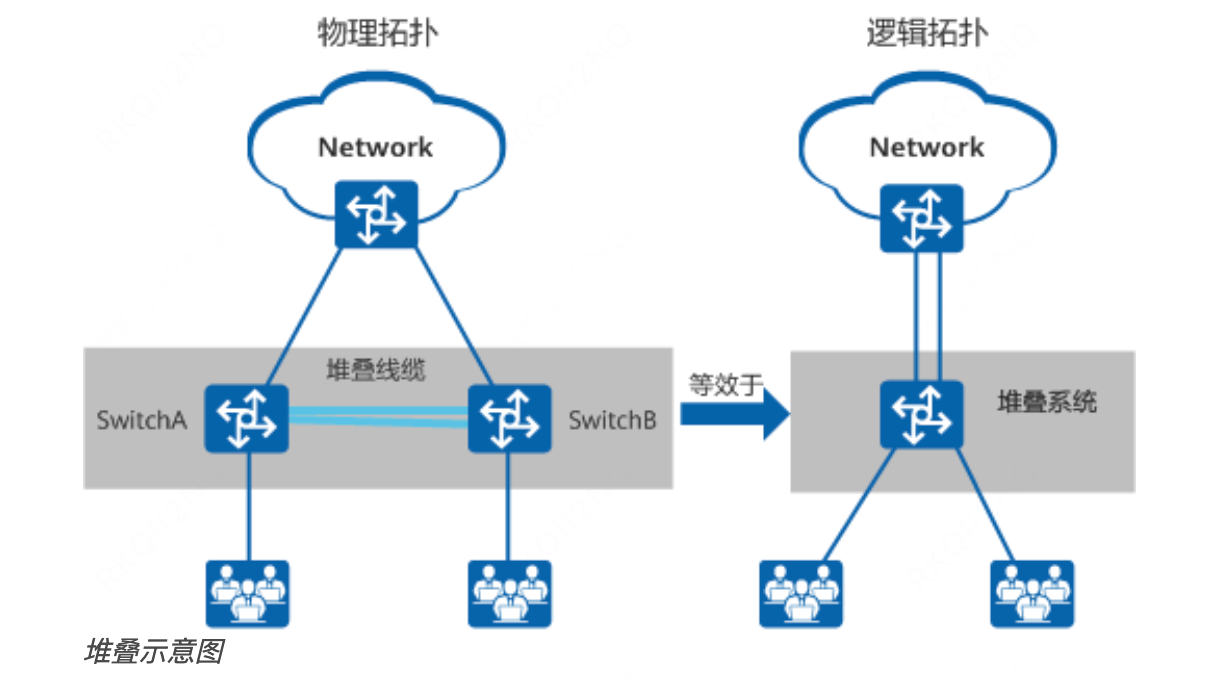
去堆叠技术
-
去堆叠架构取消了两台交换机之间的物理连接,以降低故障风险。服务器通过两条链路分别连接两台独立交换机,并采用 LACP 链路聚合。此时,交换机需配置相同的系统 ID 和不同的端口 ID,以“欺骗”服务器建立聚合链路。
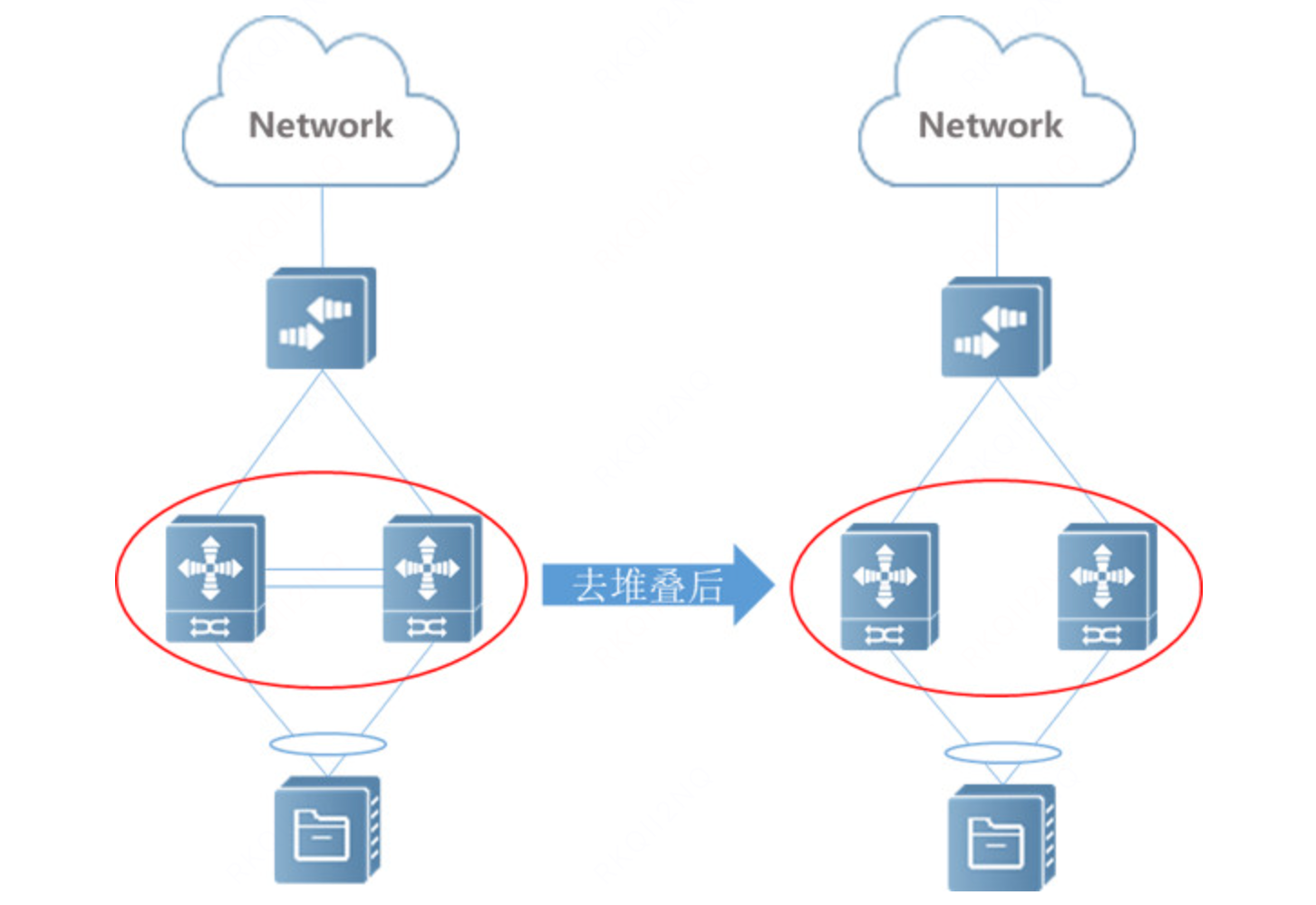 此外,需要在 Linux 内核侧支持 ARP/ND 广播,这样两台交换机能够接收到 ARP/ND 报文,实现会话同步。Linux 内核已经支持该特性:
net: bonding: add broadcast_neighbor option for 802.3ad
net: bonding: add broadcast_neighbor netlink option
net: bonding: send peer notify when failure recovery
 1
 2
 3
 4
 5
 6
 7
 8
 9
10
11
12
13
14
15
16
17
18
19
20
21
22
23
24
25
26
27
28
29
30
31
32
33
34
35
36
37
38
39
40
41
42
43
44
45
46
47
48
49
50
51
52
53
54
55
56
57
58
59
60
61
62
63
64
65
66
net: bonding: add broadcast_neighbor option for 802.3ad Stacking technology is a type of technology used to expand ports on Ethernet switches. It is widely used as a common access method in large-scale Internet data center architectures. Years of practice have proved that stacking technology has advantages and disadvantages in high-reliability network architecture scenarios. For instance, in stacking networking arch, conventional switch system upgrades require multiple stacked devices to restart at the same time. Therefore, it is inevitable that the business will be interrupted for a while. It is for this reason that "no-stacking" in data centers has become a trend. Additionally, when the stacking link connecting the switches fails or is abnormal, the stack will split. Although it is not common, it still happens in actual operation. The problem is that after the split, it is equivalent to two switches with the same configuration appearing in the network, causing network configuration conflicts and ultimately interrupting the services carried by the stacking system. To improve network stability, "non-stacking" solutions have been increasingly adopted, particularly by public cloud providers and tech companies like Alibaba, Tencent, and Didi. "non-stacking" is a method of mimicing switch stacking that convinces a LACP peer, bonding in this case, connected to a set of "non-stacked" switches that all of its ports are connected to a single switch (i.e., LACP aggregator), as if those switches were stacked. This enables the LACP peer's ports to aggregate together, and requires (a) special switch configuration, described in the linked article, and (b) modifications to the bonding 802.3ad (LACP) mode to send all ARP/ND packets across all ports of the active aggregator. Note that, with multiple aggregators, the current broadcast mode logic will send only packets to the selected aggregator(s). +-----------+ +-----------+ | switch1 | | switch2 | +-----------+ +-----------+ ^ ^ | | +-----------------+ | bond4 lacp | +-----------------+ | | | NIC1 | NIC2 +-----------------+ | server | +-----------------+ - https://www.ruijie.com/fr-fr/support/tech-gallery/de-stack-data-center-network-architecture/ Cc: Jay Vosburgh <jv@jvosburgh.net> Cc: "David S. Miller" <davem@davemloft.net> Cc: Eric Dumazet <edumazet@google.com> Cc: Jakub Kicinski <kuba@kernel.org> Cc: Paolo Abeni <pabeni@redhat.com> Cc: Simon Horman <horms@kernel.org> Cc: Jonathan Corbet <corbet@lwn.net> Cc: Andrew Lunn <andrew+netdev@lunn.ch> Cc: Steven Rostedt <rostedt@goodmis.org> Cc: Masami Hiramatsu <mhiramat@kernel.org> Cc: Mathieu Desnoyers <mathieu.desnoyers@efficios.com> Cc: Nikolay Aleksandrov <razor@blackwall.org> Signed-off-by: Tonghao Zhang <tonghao@bamaicloud.com> Signed-off-by: Zengbing Tu <tuzengbing@didiglobal.com> Link: https://patch.msgid.link/84d0a044514157bb856a10b6d03a1028c4883561.1751031306.git.tonghao@bamaicloud.com Signed-off-by: Paolo Abeni <pabeni@redhat.com> -
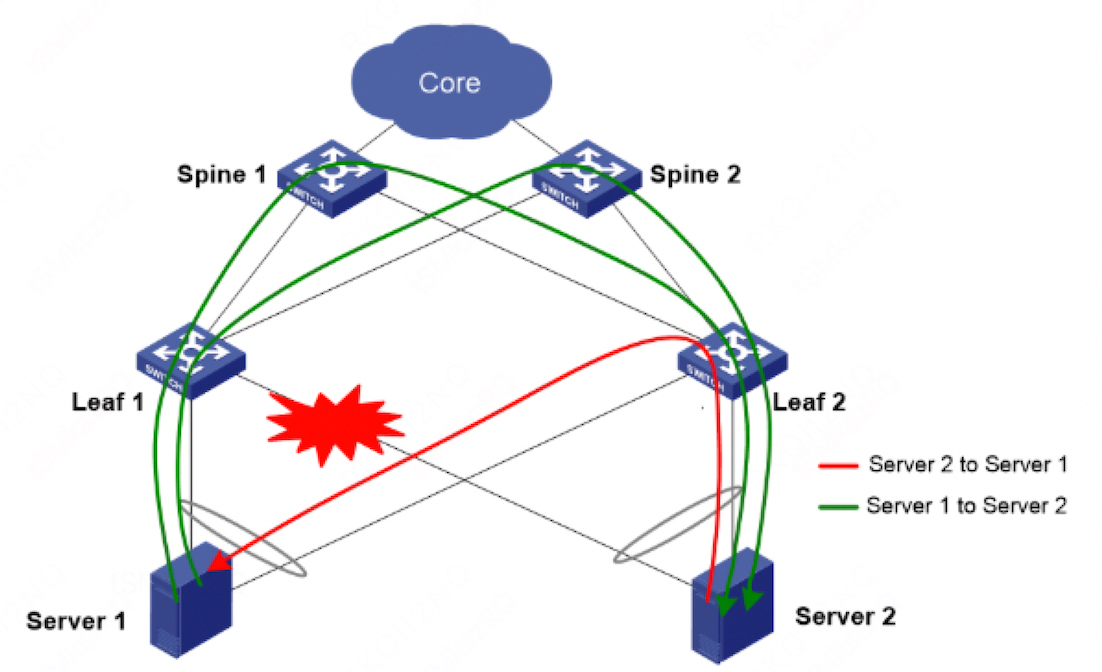
为解决可能的流量黑洞问题(如交换机下联一条物理链路故障后,服务器是感知不到该事件的仍向故障交换机发送数据导致丢包),需将所有流量导向三层路由。即使同一接入层(TOR)内的服务器间通信,也需经过三层路由转发,避免二层流量直连造成的黑洞。
-
为实现三层路由,需启用 ARP/ND 代理功能,并为两台交换机配置相同的网关 MAC 地址。同时,为避免组播干扰,需关闭交换机的组播功能。
 1
 2
 3
 4
 5
 6
 7
 8
 9
10
interface Vlanif3 description K8S-Access ip address 10.0.8.1 255.255.248.0 arp timeout 90 arp proxy anyway enable mac-address 0000-8989-0001 arp delete trigger link-down enable arp direct-route enable arp direct-route delay 120 arp direct-route preference 1 -
交换机将学习到的服务器 ARP/ND 信息转换为主机路由,并通告给上层交换机,从而确保回程流量可正确送达。
-
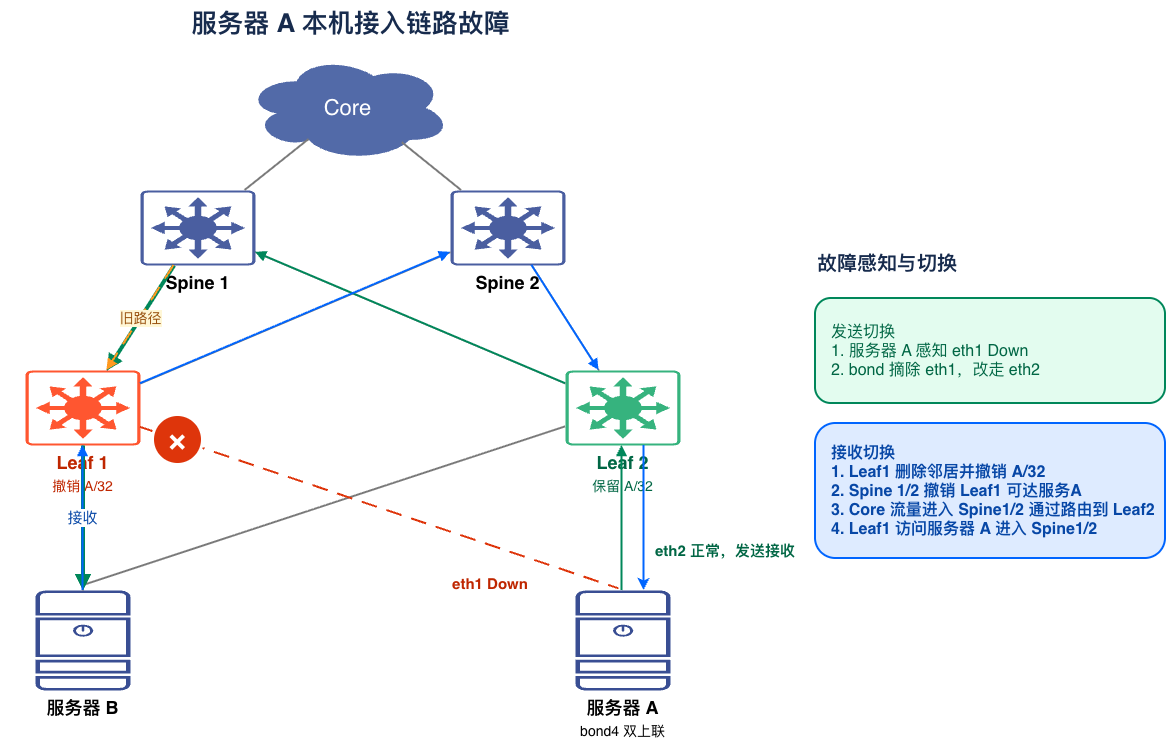
单上联只需表达服务器“可达”或“不可达”。去堆叠双上联还需表达服务器当前可经哪台 ToR 到达。一侧下联故障后,故障侧 ToR 必须及时删除邻居项、撤销主机路由,使上层网络移除该路径并保留正常侧路径。由于两台 ToR 之间没有 Peer-Link,误送至故障侧的流量无法绕行。因此,该架构的关键是保证下联数据面状态与主机路由同步收敛;否则,即使服务器仍可经另一侧到达,部分流量仍会进入黑洞。
-
macvlan 将每个容器以独立 MAC/IP 暴露给物理网络,容器生命周期及迁移会触发 MAC、邻居和主机路由更新。大规模部署会加剧接入层表项抖动,并增加核心 RIB/FIB、下一跳及 ECMP 资源压力。控制面与 FIB 收敛存在时差,期间可能出现不可达、旧路径转发或流量黑洞;相关资源耗尽还会限制容器规模。
-
OSPF 与 BGP 的差异主要在传播机制和策略控制,而非路由是否全网扩散。OSPF 在 Area 内泛洪 LSA,BGP 按邻居增量通告并支持策略控制。若缺少聚合、过滤或分层,容器
/32或/128路由仍会进入核心,消耗 RIB/FIB、下一跳和 ECMP 资源。BGP 更适合承载大规模主机路由,但只有将明细路由限制在较低层级,才能控制核心路由规模。
-
-
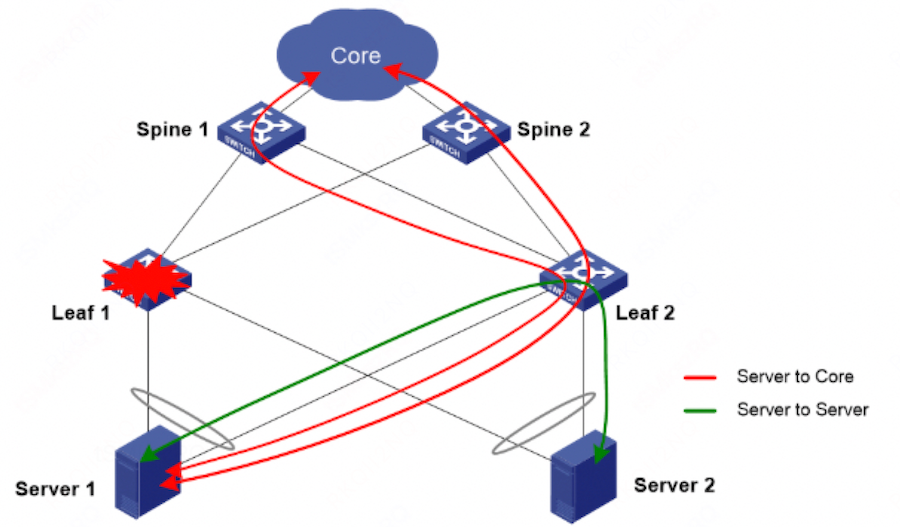
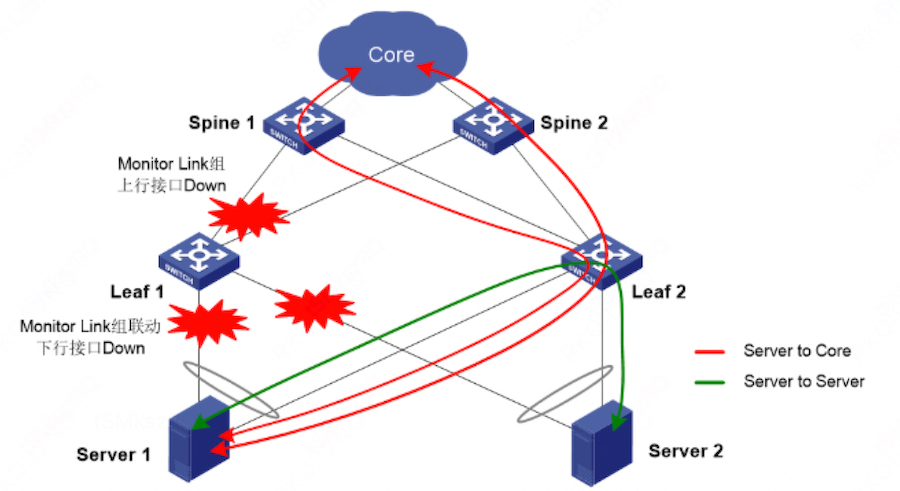
为保障高可用性,需启用上联接口监控:若交换机的所有上联接口均断开,则自动关闭下行接口;当上联接口恢复时,下行接口延迟启用。服务器侧,当 slave 链路断开后,绑定模块会立即将其移出发送队列;链路恢复后,需等待 LACP 协商成功,该链路才会重新启用。
-
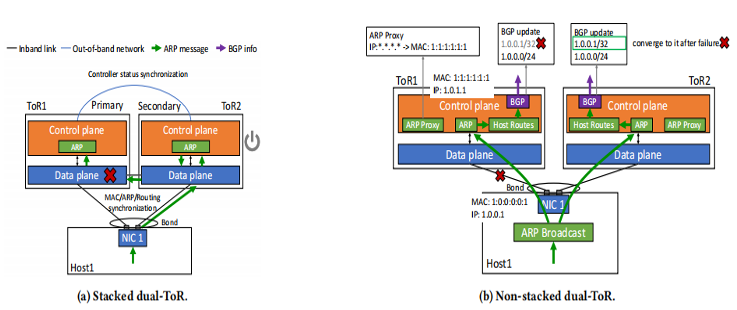
消除单点故障。双平面组网采用非堆叠的双ToR高可用设计,去除了横穿线,配合ARP双发与BGP主机路由收敛,通过上行的BGP协议宣告给整个平面。让服务器网卡能够无缝对接两台上行设备,彻底消除了ToR节点的单点故障。
-
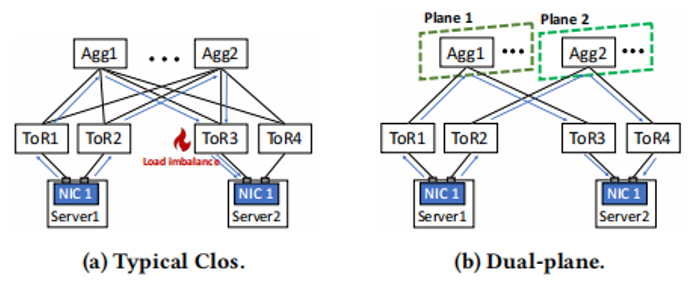
物理彻底隔离,从根源解决哈希极化。如果依然采用传统的全互联网络,一张网卡分流出的数据在汇聚层依然会产生哈希极化。而在双平面解决方案中,网络被划分为两个完全没有物理链路互联的独立平面(如平面1和平面2)。流量从网卡发出后,被强制分流到不同的平面中转发,这种物理层面的隔离,从根本上根除了哈希极化现象。
-
如何监控故障。HUATUO 项目提供了 LACP/NETDEV-HW 监控,这样能够提前感知故障的发生。在实际的生产环境,我们确实检测到了很多因 AOC 模块不可用导致 LACP 协议异常,因网络硬件丢包导致的网络不可用。
AOC 故障并不一定表现为稳定的 Link Down,以下两类灰故障尤其需要关注:
- 光功率临界:AOC 的接收光功率接近灵敏度边界时,物理层可能仍能维持 Link Up,但 FEC 纠错、CRC/FCS 或 PCS 错误会持续增加。由于网卡 carrier 未断开,LACP 可能继续将该成员链路保持在 Collecting/Distributing 状态,绑定模块也会继续把部分流量哈希到这条链路,进而造成间歇性丢包或流量黑洞。此时另一条上联即使完全正常,也不会自动承接仍被判定为可用的故障链路上的流量。
- 间歇性 Link Flap:受 AOC 接触不良、温度变化、供电波动或内部器件异常影响,链路可能在 Up 和 Down 之间反复切换。每次 Link Down 都会触发成员链路摘除和流量切换;恢复后又需要重新完成 LACP 协商才能加入聚合组。频繁抖动会导致反复收敛、短时丢包、报文乱序和 TCP 重传,延迟敏感或 RDMA 业务还可能发生超时。若抖动持续时间很短或监控粒度不足,故障也可能难以被常规轮询及时捕获。
 1
 2
 3
 4
 5
 6
 7
 8
 9
10
11
12
13
14
15
16
17
18
19
20
# git clone https://github.com/ccfos/huatuo.git # ls -l huatuo/bpf/ total 84 -rw-r--r-- 1 root root 1677 Aug 11 01:44 cgroup_css_events.c -rw-r--r-- 1 root root 1450 Aug 31 22:24 cgroup_css_gather.c -rw-r--r-- 1 root root 4539 Aug 11 01:44 dropwatch.c -rw-r--r-- 1 root root 801 Aug 29 10:16 hungtask.c drwxr-xr-x 2 root root 4096 Aug 29 10:16 include -rw-r--r-- 1 root root 648 Aug 11 01:44 lacp.c -rw-r--r-- 1 root root 2155 Aug 11 01:44 memory_free_compact.c -rw-r--r-- 1 root root 1424 Aug 11 01:44 memory_reclaim.c -rw-r--r-- 1 root root 1421 Aug 11 01:44 memory_reclaim_events.c -rw-r--r-- 1 root root 1044 Sep 6 03:09 netdev_hw.c -rw-r--r-- 1 root root 4219 Aug 11 01:44 netrecvlat.c -rw-r--r-- 1 root root 1553 Sep 5 09:26 oom.c -rw-r--r-- 1 root root 1491 Aug 18 07:06 perf.c -rw-r--r-- 1 root root 8683 Aug 11 01:44 runqlat_tracing.c -rw-r--r-- 1 root root 1879 Sep 26 04:32 softirq.c -rw-r--r-- 1 root root 3429 Aug 11 01:44 softirq_tracing.c -rw-r--r-- 1 root root 1117 Aug 29 10:16 softlockup.c
其他
- lacp edge-port 非常有意思的一个功能,在无法使用或者初始化配置前,对双上联网络的一种降级,能够保障网络的可用性。
- Mirror On Drop (MOD) 日常运维,如果无法确认哪里出现丢包(服务器 tcpdump 已经发送,但是交换机无接收),可以尝试在交换机侧配置 MOD。